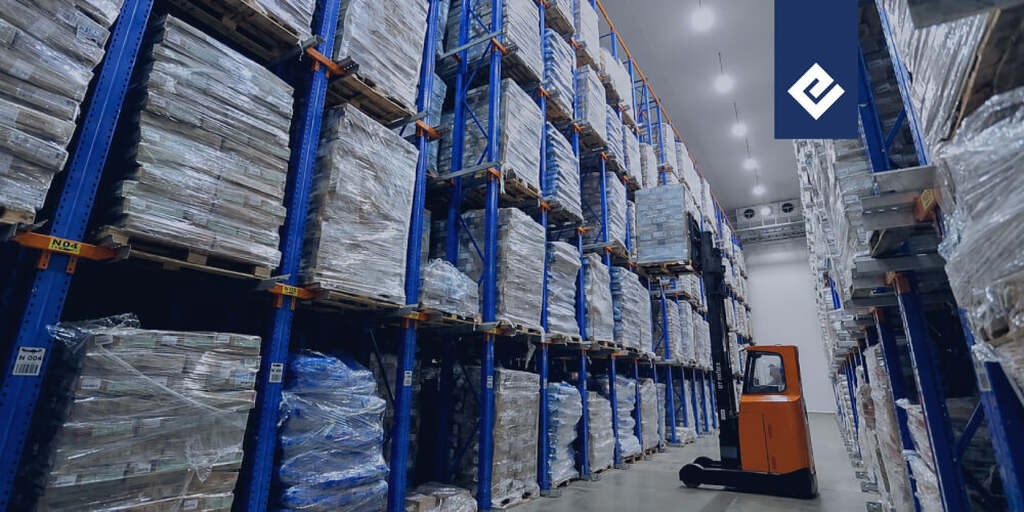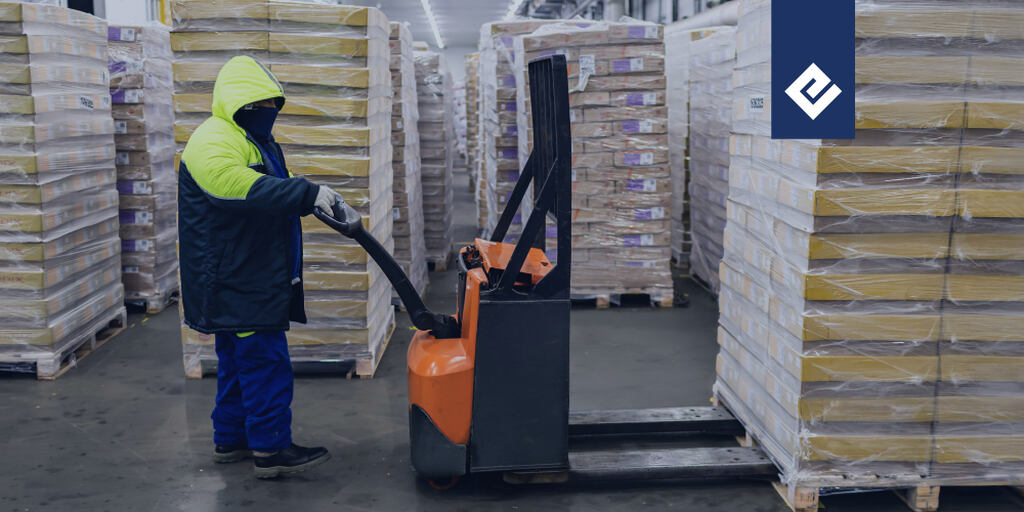


Warehouse management is a central element in ensuring that food and other sensitive products are preserved with quality, safety, and efficiency throughout the logistics chain.
In an industry marked by strict sanitary requirements, temperature control, and short shelf lives, properly managing storage is no longer just an operational task but has a direct impact on companies’ competitiveness.
When well-structured, management allows for the organization of the flow of goods, the reduction of waste, and the maintenance of product traceability. This becomes even more relevant in the case of perishable foods, which depend on specific storage conditions to maintain their nutritional, sensory, and sanitary characteristics.

What is storage management?
Storage management consists of the set of strategies, processes, and technologies used to organize, control, and optimize the storage of perishable foods within warehouses and distribution centers.
This process involves various activities, such as receiving goods, inventory control, internal handling, product preservation, and preparation for shipment. In the case of perishable foods, it also includes specific precautions related to hygiene, temperature, and traceability.
The importance of warehouse management in the logistics process
In the logistics context, warehouse management plays a strategic role in integrating production, distribution, and consumption.
When storage processes are well-planned, the flow of goods occurs in a more organized and predictable manner. This helps reduce delays, optimize available space, and improve control over stocked products.
In the case of perishables, this management is even more critical, as these types of products must be kept in appropriate environments to prevent spoilage and preserve their quality until the time of consumption.
In addition, effective storage control facilitates traceability, allowing for the rapid identification of each batch’s origin, tracking its movement, and ensuring transparency during audits and health inspections.
Thus, storage management directly contributes to supply chain efficiency and food safety.
Key stages of storage control
To function effectively, storage management must consider the various operational stages that make up the logistics flow within the warehouse.
Among the key stages are:
● Receiving goods: involves checking documents, inspecting perishable products, and verifying transport conditions, including temperature and packaging integrity;
● Proper storage: perishable foods are placed in specific areas of the warehouse, adhering to criteria such as food type, temperature range, and turnover;
● Inventory control: consists of constantly monitoring the quantity of stored products, ensuring that information is always up to date;
● Order picking: also known as picking, this step involves selecting items according to customer or distribution center demands;
● Shipping: the final step in which products are prepared for transport, with the necessary information recorded for traceability.
Each of these phases must be executed with precision to ensure food integrity and the efficiency of the logistics operation.
Best practices for ensuring efficient management
Managing the storage of perishables depends on adopting good operational practices and using technologies that allow for greater control over processes.
Among the most important strategies are inventory organization, strict control of expiration dates, logistics planning, and process automation.
These practices help reduce errors, improve space utilization, and increase the reliability of operations.
Below are some of the key pillars for optimizing food storage.
Inventory Organization and Control
Inventory organization is one of the fundamentals of storage management.
Keeping products clearly labeled and properly positioned facilitates access to goods, reduces handling time, and prevents errors in order picking.
Control methods such as FIFO (first in, first out) and FEFO (first expire, first out) are widely used in the food industry to ensure products are distributed according to their order of entry or expiration date.
Additionally, categorization by product type and temperature range helps preserve food quality and prevent cross-contamination.
Expiration Date Management
Monitoring expiration dates is an essential aspect of food storage management.
Perishable products have short shelf lives, which requires constant tracking of expiration dates to prevent waste.
Monitoring systems allow for the quick identification of items nearing their expiration date, enabling actions such as stock redistribution or prioritization in shipping.
This control also contributes to food safety, ensuring that products delivered to consumers meet quality standards and regulatory compliance.
Strategic Planning
Another important element in warehouse management is logistics planning.
Properly planning space utilization, material flow, and capacity needs helps avoid operational bottlenecks and reduce costs.
In the case of food, planning also involves forecasting seasonal demand and adjusting the storage structure to accommodate periods of higher volume.
With efficient planning, companies can improve the predictability of operations and maintain a balance between supply and demand.
Automation of warehouse processes
Technology plays an increasingly important role in modernizing warehouse management.
Warehouse management systems, known as WMS (Warehouse Management System), allow for real-time monitoring of all logistics operations, from receiving to shipping.
For Moises Ventocilla, Director of Engineering at Emergent Cold LatAm, the impact goes beyond operational organization: “Real-time dashboards allow supervisors to make proactive rather than reactive decisions—it is possible to identify patterns of equipment or process failures and plan for predictive maintenance.”
These platforms help organize inventory, reduce operational errors, and improve product traceability.
Another important technology is the use of RFID (radio-frequency identification), which facilitates the automatic tracking of goods and increases the accuracy of inventory information.
With automation, companies can make operations more agile, secure, and efficient.
Discover our temperature-controlled storage solutions
For companies handling perishable foods, relying on a specialized logistics operator can be a strategic decision.
Operators with cold chain experience have the appropriate infrastructure, advanced technology, and trained teams to ensure the safe storage of sensitive products.
We offer comprehensive temperature-controlled storage solutions, featuring multiple temperature ranges, continuous monitoring, and integrated logistics management systems.
Our facilities are designed to help companies optimize storage management, reduce operational risks, increase supply chain efficiency, and ensure food quality throughout the entire operation.