

What factors explain the growth and relevance of the pork industry on the global stage?
Essential for protein supply and international food trade, the sector has undergone significant modernization in recent decades, driven by technological advances, stricter health standards, and increased demand.
Today, production involves a complex chain that includes breeding, processing, storage, and distribution, requiring integration between stages, adequate infrastructure, and specialized management to ensure quality, food safety, and logistical efficiency.

How important is pig farming on the global stage?
Pork is one of the most widely consumed animal proteins in the world, accounting for about 36% of global meat consumption, according to data from the Food and Agriculture Organization of the United Nations.
With a strong presence in Europe and Asia, pig farming occupies a strategic position in the global food supply chain. Its production chain generates billions of dollars annually and creates jobs at every stage (from agricultural production and animal husbandry to processing, storage, and distribution).
Another important aspect is the technological advancement that has transformed the sector. Genetic improvements, more efficient animal nutrition, and increasingly monitored production systems have contributed to increased productivity and optimized resource use.
At the same time, consumers and regulatory authorities have raised standards regarding transparency, animal welfare, and the sustainability of operations.
The pork industry in Latin America
In Latin America, per capita pork consumption is expected to see the highest global growth, with an average increase of 1.3 kg per year.
This is due to the more favorable price ratio between pork and beef, according to the Agricultural Outlook Report 2024–2033, prepared by the Organization for Economic Cooperation and Development and the Food and Agriculture Organization of the United Nations.
In addition to domestic consumption, there is strong production for exports.
Brazil, for example, has already set a record for pork exports in 2025, according to data from the Brazilian Animal Protein Association (ABPA), reported in a G1 article. In total, 1.510 million tons were shipped—a volume 11.6% higher than that recorded in 2024, when 1.352 million tons were exported.
This growth, however, is not limited to the Brazilian market. In countries such as Mexico, Colombia, Guatemala, and the Dominican Republic, consistent growth is observed in pork production, consumption, and exports.
Data from the United States Department of Agriculture (2025) indicate that Mexico generates approximately US$2.85 billion in exports, followed by Colombia (US$365.45 million), the Dominican Republic (US$290.62 million), and Guatemala (US$148.02 million), highlighting the expansion of the industry across different markets in the region.
These results reflect the strengthening of Latin America’s presence in international markets. Among the main destinations for Brazilian pork are the Philippines, China, Chile, Japan, and Hong Kong, highlighting the diverse global demand for this protein.
This regional growth is driven by factors such as the wide availability of grains for animal feed, investments in technology, advancements in production systems, and improvements in supply chain management.
In addition, proximity to major consumer markets and the expansion of logistics infrastructure reinforce Latin America’s competitiveness in the sector.
See also one of our success stories: Container shortage: the importance of a reliable supplier to maintain the cold chain
Key logistics stages in the pork industry
Logistics is a central element in ensuring that pork industry products reach consumer markets with quality and safety.
After slaughter and processing, pork must be stored, transported, and distributed under controlled conditions to preserve its characteristics and meet health standards.
Each logistics stage involves specific processes that require adequate infrastructure, technology, and continuous monitoring.
Processing
Pork processing takes place in slaughterhouses and specialized industrial plants, where animals are slaughtered and transformed into different cuts and derived products.
This stage involves strict sanitary protocols, veterinary inspections, and quality control. After slaughter, the meat undergoes cooling processes to rapidly lower the temperature and prevent the proliferation of microorganisms.
Depending on the final product, the meat may be intended for fresh consumption or used in the production of processed foods, such as sausages, hams, and other products.
Proper processing is essential to ensure food safety and prepare the products for the next stages of the supply chain.

Storage
After processing, storage becomes a critical step in the pork industry supply chain.
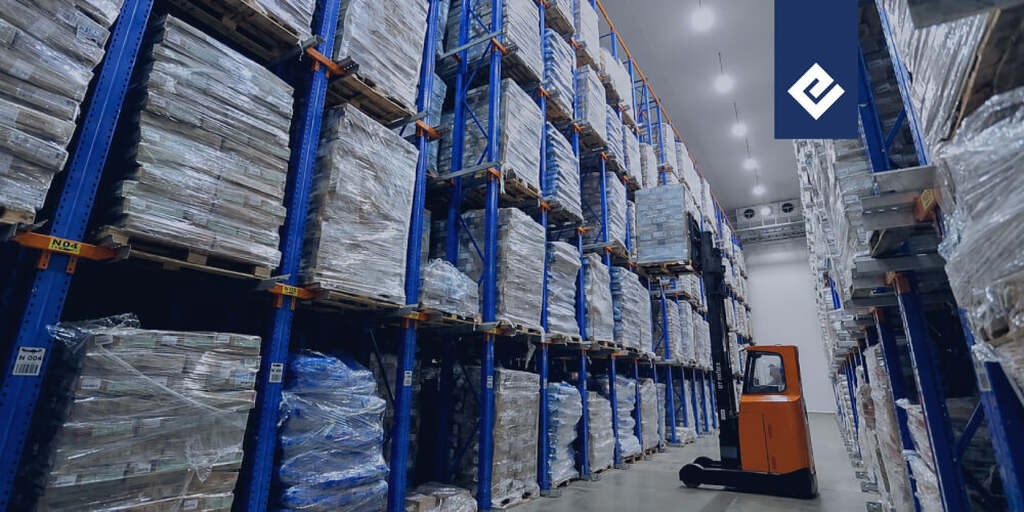
The meat must be kept in refrigerated or frozen storage at specific temperature ranges that preserve its quality and extend the product’s shelf life.
In addition to temperature control, storage requires proper inventory organization, batch traceability, and constant monitoring of environmental conditions.
Technologies such as temperature sensors, warehouse management systems (WMS), and remote monitoring platforms help ensure greater precision and safety in the storage of perishable foods.
Transportation and Distribution
The transportation of pork requires refrigerated vehicles capable of maintaining the proper temperature throughout the entire journey.
This stage connects meatpacking plants, distribution centers, retail chains, and international markets. Any failure in temperature control can compromise product quality and result in significant losses.
Therefore, transportation within the pork industry supply chain depends on logistics planning, continuous monitoring, and integration between logistics operators and food sector companies.
In addition to domestic transport, exports require compliance with additional requirements, such as health certifications, traceability, and regulatory documentation.
Pork industry: regulatory standards and essential practices
The production and marketing of pork are heavily regulated by national and international health standards.
Government authorities and international organizations establish requirements ranging from animal rearing to product processing and export. These regulations aim to ensure food safety, prevent diseases, and guarantee the quality of food available on the market.
Furthermore, it is worth noting that certain practices, such as traceability, health inspections, and strict temperature control, are essential for meeting these requirements.
Furthermore, companies in the sector have invested in quality certifications and management systems that enhance the transparency and reliability of the production chain.
Key Challenges in the Swine Sector
Despite technological advances and market growth, the swine industry still faces significant challenges throughout its production chain.
Among the key areas of focus for the sector are:
● Disease control: one of the greatest risks is related to the spread of diseases that can affect herds, such as African swine fever. Health crises of this nature can have significant impacts on production and international trade.
● Sanitary and regulatory requirements: importing markets are imposing increasingly stringent standards. To gain access to certain countries, producers and industries must meet high criteria for quality, traceability, and sanitary control.
● Environmental sustainability: environmental issues have gained prominence in pig farming. The sector seeks to reduce emissions, improve waste management, and optimize the use of natural resources to make production more efficient and sustainable.
● Logistics and cold chain: logistics is a critical factor in ensuring product quality. Proper storage, efficient refrigerated transport, and safe distribution are essential to preserving the integrity of pork throughout the entire supply chain.
In this context, the integration of production, processing, and the cold chain becomes a strategic factor in sustaining the growth and competitiveness of the pork industry.
Discover our logistics solutions for pork exports from Latin America
As mentioned, pork exports require efficient logistics and strict temperature control to preserve product quality throughout the entire supply chain.
Given this scenario, it is worth noting that we offer temperature-controlled storage solutions, inventory management, and logistics support for the import and export of perishable foods.
With specialized infrastructure and a strategic presence in Latin America, we work to optimize the flow of goods, ensure food safety, and meet the sanitary requirements of international markets.