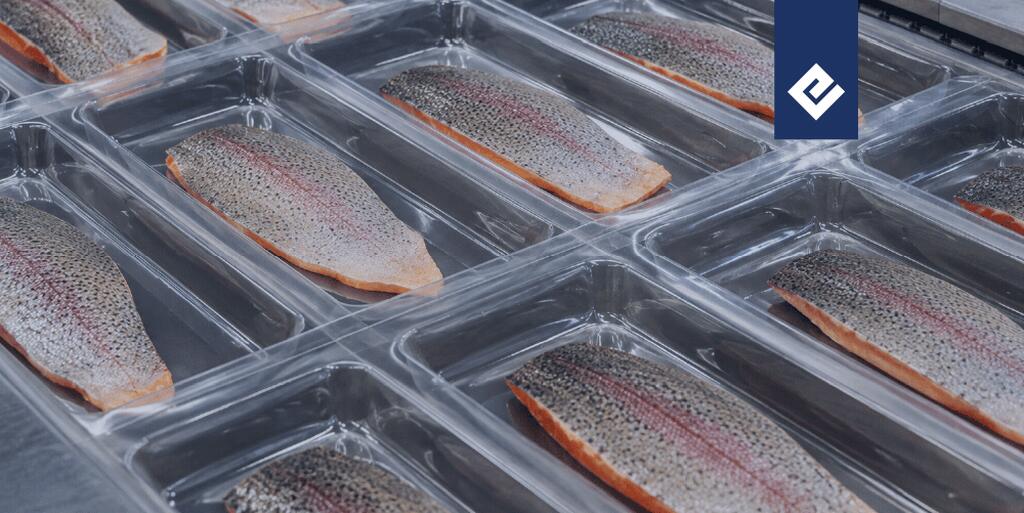


Rainbow trout is available in various markets and consumption formats, the result of a production chain that links aquaculture to processing and international distribution.
In Latin America, Chile and Colombia hold prominent positions in the production and marketing of this fish. Natural conditions favorable to the farming of cold-water fish, combined with the development of aquaculture, help explain the presence of these two countries in this market.
However, production is only part of the process. Since it is a perishable food product, maintaining proper storage conditions from processing through delivery to the customer is essential.
It is in this context that refrigerated and frozen storage, as well as inventory management and temperature-controlled transportation, take on greater importance.

What are rainbow trouts?
Rainbow trout (Oncorhynchus mykiss) is a fish of the salmonid family. The species thrives in cold, well-oxygenated waters and adapts well to aquaculture systems (a characteristic that has contributed to its widespread adoption in aquaculture across different regions of the world).
The species also offers various commercial options, as it can be sold whole, gutted, in fillets, fresh, frozen, or smoked, among other forms. This diversity makes it possible to cater to different consumer profiles and sales channels.
In fact, it is worth noting that the market continues to show prospects for expansion. According to estimates by Mordor Intelligence, the global rainbow trout market is expected to grow from $5.3 billion in 2026 to $6.9 billion in 2031.
Among the factors driving this growth are the demand for foods rich in protein and omega-3 fatty acids, as well as technological advances in aquaculture.
Why are Chile and Colombia leading producers?
Commercial trout production depends on specific conditions. The availability of cold, high-quality water is a key factor, as temperature directly influences the fish’s development.
Chile has favorable natural conditions and a well-developed aquaculture supply chain, with production expertise and infrastructure related to the processing and export of fish.
The country’s presence in the international market also benefits from a logistics structure built around a salmonid industry geared toward various destinations.
Recent data help illustrate the scale of this participation. Information released by the Chilean Undersecretariat of Fisheries and Aquaculture indicates that, as of February 2026, Chilean exports of rainbow trout totaled $1.4 billion.
In Colombia, meanwhile, high-altitude areas provide excellent conditions for the production of cold-water species. The regions of Nariño and Boyacá are part of this landscape, representing ideal locations for rainbow trout farming.
The Role of These Countries in the International Market
In addition to production, Chile and Colombia have significant ties to foreign markets.
In Chile’s case, the aquaculture sector’s export experience facilitates the trout’s access to various consumer markets. Market data also identifies the country as a major South American supplier, supported by its production and well-established export logistics.
Colombia has also developed an export track record for this species. According to data from UN Comtrade, provided by the World Bank WITS, in 2024 the United States was the main destination for Colombian exports of fresh or chilled trout.
This context underscores the need to consider not only production capacity but also the entire infrastructure that enables a perishable product to travel long distances while maintaining its quality.
How does the production and export chain work?

Before reaching the consumer, rainbow trout go through various stages. The process begins with farming, which involves monitoring water conditions, feeding, and the fish’s growth until they reach the appropriate size for sale.
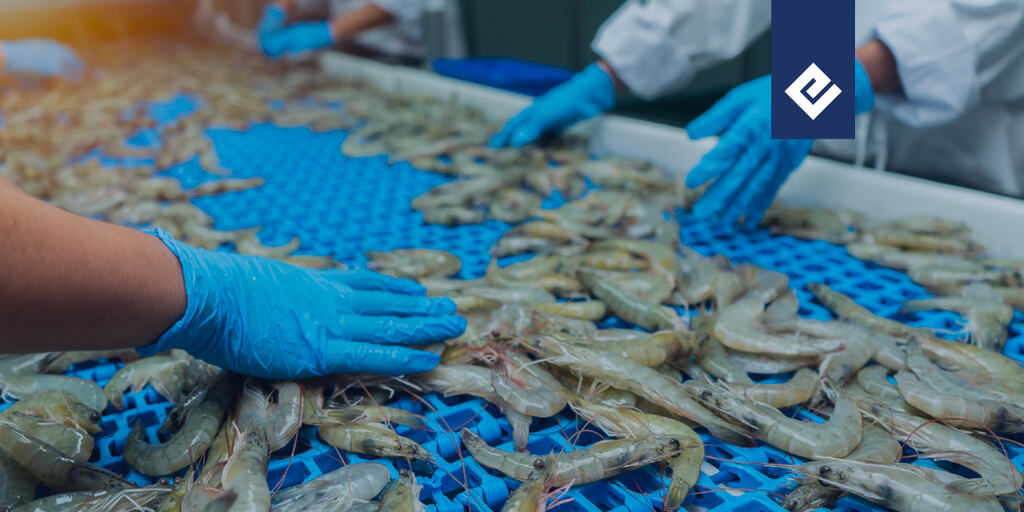
After harvest, the product moves on to processing, which may involve operations such as gutting, cutting, filleting, packaging, and freezing, depending on the product format and destination market.
From this point on, temperature-controlled logistics become even more important. The trout may remain in refrigerated or frozen storage before proceeding to distribution or export, depending on the product’s characteristics and the operation.
At this stage, activities such as consolidating shipments from different batches, organizing orders by destination, and preparing cargo for shipment via available modes of transportation may also be carried out.
This entire workflow depends on effective coordination between production, processing, storage, and transportation—especially when the product must travel long distances to reach the consumer market.
What logistical challenges does this market face?
The perishability of fish is one of the main challenges of the operation. Inappropriate temperature fluctuations can affect characteristics such as texture, appearance, and shelf life, making the continuity of the cold chain a key concern throughout the entire journey.
Another challenge lies in inventory and shipment planning. Product availability, deadlines, storage capacity, and transportation scheduling must be coordinated to minimize delays and unnecessary movements.
For exports, there are also documentary and sanitary requirements. These requirements may vary depending on the destination country and involve specific certificates, registrations, controls, and procedures for the fish to enter each market.
Furthermore, the longer and more complex the route, the greater the need for visibility into inventory and control over storage and transportation conditions. These factors help make the operation more predictable and preserve the product’s characteristics until it reaches its final destination.

Emergent Cold LatAm: Support for the Rainbow Trout Supply Chain
In perishable food markets, an efficient logistics chain helps preserve the quality established during production throughout subsequent stages.
We operate in Latin America with solutions for warehousing, inventory management, cargo consolidation, processing, and temperature-controlled transportation, supporting rainbow trout producers, processors, and exporters at different stages of the operation.
In Colombia, our operations are located in Buga, Cartagena, Bogotá, and Bucaramanga. In Chile, we operate in Talcahuano, Santiago, San Antonio, Puerto Varas, San Pedro de la Paz, and Valparaíso, expanding our capacity to serve production regions, consumption centers, and flows related to international trade.
In markets such as Chile and Colombia, where rainbow trout also has export opportunities, this presence helps connect different stages of the supply chain, from storage to transportation and shipping.