

Automated warehouses are gaining ground as a strategic solution for logistics operations that require a high level of control and efficiency, especially in the cold chain.
In a scenario with strict sanitary requirements, tight deadlines, and pressure to reduce costs, automation is no longer optional but has become a competitive advantage.
This model enables greater operational precision, fewer errors, and improved predictability. For perishable goods, the impact is direct on food quality and safety.
Throughout this content, you will learn how this structure works, what technologies are involved, and how it connects to refrigerated logistics.
What is an automated warehouse?
An automated warehouse is a facility that uses technological systems to perform logistics activities with minimal human intervention. These activities include storage, material handling, order picking, and shipping.
Unlike traditional models, which rely more heavily on manual operations, automation integrates equipment and systems that operate in a coordinated manner.
In the cold chain, this reduces the exposure time of perishable goods (meat, fruits, vegetables, etc.) to temperature fluctuations and improves control over storage conditions. The result is a safer, more standardized, and more efficient operation.
Key Technologies Used in Logistics Automation
Logistics automation is supported by a suite of technologies that structure, execute, and coordinate operations within the warehouse.
The WMS (Warehouse Management System) acts as the central management system, responsible for controlling inventory, addressing, stocktaking, and operational flows in real time. It ensures visibility and traceability throughout the entire operation.
Identification technologies, such as barcodes and RFID, enable accurate data capture at every stage, reducing errors and ensuring product control.
At the operational level, sensors, automated conveyors, and material handling equipment connect the digital environment to the physical execution of logistics activities. Building on this foundation, more advanced automation solutions come into play.
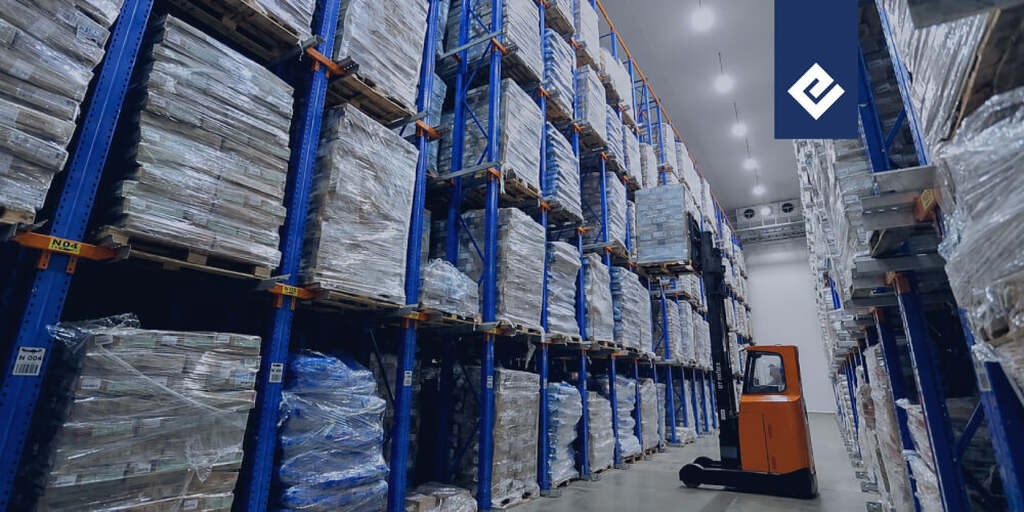
AS/RS (Automated Storage and Retrieval Systems) automatically handle the storage and retrieval of loads in high-density structures, optimizing space utilization and reducing item access time.
Robotics complements this process by performing internal handling, replenishment, and order picking, ensuring greater fluidity and consistency in flows.
In this scenario, the WMS also takes on the role of orchestrating the operation, integrating equipment, setting priorities, and ensuring end-to-end traceability.
The result is a highly synchronized operation, with greater speed, precision, and predictability—essential factors for complex logistics operations, such as those in the cold chain.

What are the different levels of automated warehouses?
At the basic level, there is partial automation, involving the use of systems such as WMS and some automated equipment. At intermediate levels, integration increases: conveyor belts, sensors, and automated picking systems become part of the operation.
In the most advanced models, virtually all activities are automated. This level is common in large-scale operations that require high productivity and strict control.
The choice depends on the volume, complexity, and objectives of the operation.
Advantages of automation in the cold chain
Some of the main benefits are increased storage capacity and reduced energy costs.
In addition, automation contributes to process standardization, which reduces manual interventions and, consequently, the risk of failures that could compromise product integrity.
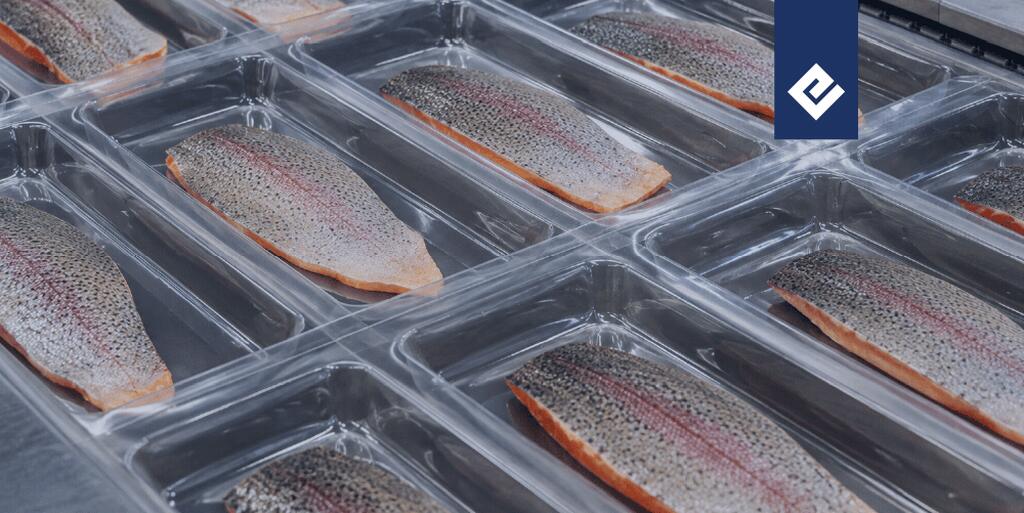
This is even more important for sensitive items, such as meat, dairy products, ready-to-eat foods, and fruits and vegetables, which require strict storage conditions.
Traceability has also evolved significantly. With the support of integrated systems, it is possible to track every stage of the operation (from intake to dispatch in real time), which provides greater control, transparency, and assurance of compliance with health regulations.
Another important benefit is the reduction of losses. By minimizing temperature fluctuations, operational errors, and rework, automation helps reduce waste and increase inventory utilization.
Finally, these operational gains directly translate into a better customer experience. Products arrive with higher quality, meeting expected standards, and with greater reliability.
The result of all this is the strengthening of companies’ reputations.
See also one of our success stories: VPC Company: how the cold chain boosted sales by 15% and reduced waste by 4.5%
The challenges of temperature-controlled food operations
The food industry faces ever-greater challenges in the cold chain. As demand grows, so does the need for faster, more precise operations capable of maintaining temperature control and traceability throughout the entire product handling process.
In this context, ensuring temperature stability and operational agility become priorities, especially in high-volume operations with strict sanitary requirements.
This is precisely why automated warehouses are gaining traction as a strategic solution for operations that need to boost productivity and safety in the storage of perishable foods.
Why outsource cold chain logistics?
As mentioned, logistics automation requires investment, technical expertise, and specialized management.
Given this scenario, many companies opt for outsourcing, a model that allows access to advanced infrastructure without the need for significant in-house investment, while also reducing operational risks and facilitating scalability.
In the cold chain, this decision becomes even more strategic due to the technical and regulatory requirements involved.
By relying on a specialized partner, the company can focus its efforts on its core business, while the logistics operation is managed by professionals with the necessary expertise, technology, and processes.
Count on our automated storage solutions for the cold chain
We offer advanced temperature-controlled storage solutions with a high level of automation, developed specifically for perishable foods that require strict control throughout the entire cold chain.
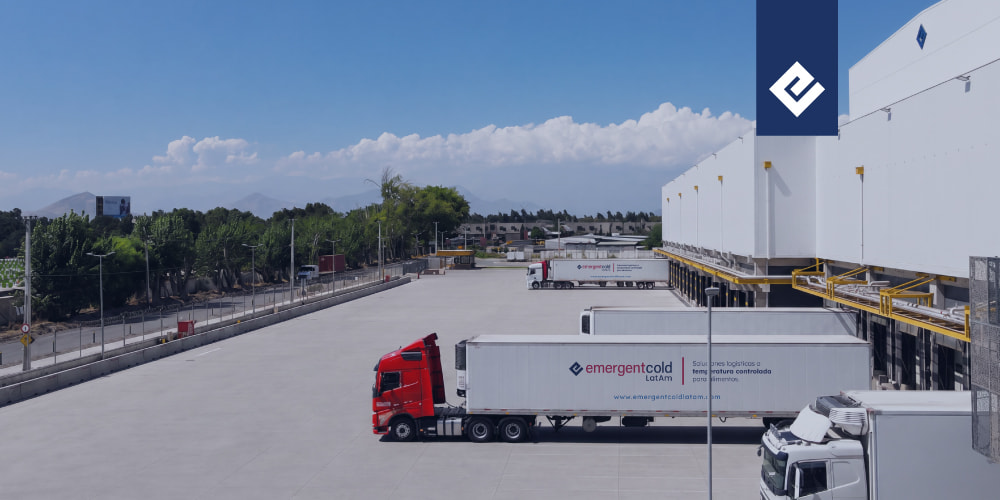
One of our key highlights is the automated warehouse in Chile, recognized as the largest in Latin America dedicated to temperature-controlled food storage.
Our facility combines high storage density with cutting-edge technologies and precise temperature control, ensuring ideal conditions for the preservation of sensitive products such as meat, dairy, processed foods, and other refrigerated or frozen items.
With this model, we provide greater operational efficiency while reinforcing food safety and product integrity, reducing risks of temperature fluctuations and losses.
With a strategic location and integrated logistics, our operation serves both the domestic market and export demands, maintaining high standards of quality and traceability.
By combining automation, cold chain expertise, and specialized infrastructure, we support our clients in building more efficient, safe, and scalable operations for the storage and distribution of perishable foods.