

The export of fish is one of the most challenging activities of the animal protein sector. How can fish and seafood arrives be guaranteed to be fresh, safe and within the international quality norms?
This challenge gains strength when we look at the growth of the sector. In the first quarter of 2025 alone, Brazil set records in exporting US$ 18.5 million in farmed fish, an increase of 112% in relation to the previous year according to Comex Stat, the data portal of the Ministry of Development, Industry, Trade and Services.
Opportunity is not lacking — what is lacking is the preparation to make the most of it, especially in the current tariff and regulatory scenario.
From the capture through to the unloading, every detail counts. Correct warehousing, monitoring transport, regulatory compliance and trackability are basic conditions for competing in an ever more demanding market.
In this article, we will show how the process of exporting fish works and what the principal norms are for the sector. We also cover the current challenges and market opportunities for those wanting to stand out globally.

How does the process of exporting fish work?
The process of exporting fish begins with the capture and processing and then goes on to the warehousing. Then, there is the issuing of the documentation required and, lastly, to the monitored transport of the cargo.
Each of these stages is interdependent, depending on the others. For example, possible faults in the documentation can delay the customs release, just as problems with the transport can compromise the temperature and the useful life of the products.
Thus, the success of the export process depends on an integrated cold chain management aligned with the international standards and good logistical practices.
Let us explore this process in greater depth!
Warehousing
Soon after the capture and the processing, the fish must be placed in refrigerated chambers or freezers to preserve their integrity.
For fresh fish, the proper range is from 0 °C to 5 °C; whereas for frozen foods, it is from –18 °C or less. This initial care guarantees that the product maintains its sensorial characteristics until it is transported — and delivered.
In this context, the use of isothermal packaging and high quality thermal boxes is similarly essential. After all, these minimize thermal oscillations, protect against impact and reduce the risk of contamination during the temporary warehousing.
Documentation
Whilst the fish remain stored, the issuing of the mandatory documentation for export release is begun.
Among the principal documents are:
- bill of sale, which describes the goods and the conditions of sale;
- shipping note, issued by the shipper;
- certificate of origin, which attests to the country of origin;
- health certificates, which attest to the healthy state of the product.
Maintaining all this documentation in accordance is essential to avoiding delays and customs complications.
Later on we shall also deal with the international norms and standards that regulate these requirements.
Transport
With the documentation approved, the fish is shipped in specific refrigerated vehicles or containers for long distances, whether by sea, air or multimodal means.
Above all, at this stage, the temperature conditions are critical: 0 °C to 5 °C for fresh products and –18 °C or less for frozen ones.
During the transport, the cargo must be accompanied by systems tracking in real time, which enable variations to be identified and failures to be corrected immediately.
Furthermore, the rigorous hygiene of vehicles and containers is essential to guarantee food safety and in prevent contaminations.
Monitoring the cargo
The monitoring is continuous right from when it leaves the warehouse until its arrival at the final destination. Technologies such as IoT, sensors and digital tracking enable constant reports on temperature and location, guaranteeing full visibility of the operation.
In countries of Latin America, where infrastructure can be additionally challenging, solutions such as smart routing and multimodal transport are fundamental.
These technologies help optimize time periods, reduce risks of failures and ensure that the fish arrive at their destination with quality preserved.
Find out more: International Logistics: how it works and the challenges
Regulatory norms for export of fish
Among the most recognized norms for the export of fish are the programs based on HACCP (Hazard Analysis and Critical Control Points), as well as practices such as GMP (Good Manufacturing Practices) and SSOP (Sanitation Standard Operational Procedures).
These guidelines are required for demanding markets such as the United States, the European Union and Canada.
In Latin America, there is increasing adoption of certifications aligned with the Global Food Safety Initiative (GFSI), such as FSSC 22000, BRCGS and IFS Logistics, demonstrating to the international commitment of companies to matters of compliance.
Another competitive differential is the Authorized Economic Operator (AEO), which speeds up customs processes and reduces bureaucracy in foreign trade.
The international fish export market in 2025: challenges and opportunities
The international fish export market is strong, even in a scenario of uncertainty.
In the first quarter of 2025 alone, Brazil set a record by exporting US$ 18.5 million in farmed fish, a growth of 112% in relation to the same period for 2024 (Comexstat).
Tilapia represented 95% of the total exported, and the United States concentrated 90% of the purchases (Embrapa).
Besides the Americans, countries such as Canada, Chile and Mexico also expanded their imports, whereas the European Union followed as a strategic destination for frozen fish.
Despite the performance, the sector faced the impact of the so called Liberation Day Tariffs of the USA. In July 2025, 1,500 tons of fish and seafood, stored in 58 chilled containers went unshipped to the US market, according to Abipesca.
There is no doubt that news such as this generates apprehension throughout the whole productive chain. On the other hand, in the assessment of David Palfenier, president of Emergent Cold LatAm, the effects are being limited.
“From the point of view of Emergent Cold LatAm, we haven’t seen effects or almost no effect. For a few weeks perhaps, people have stored a little more product whilst the documentation is drawn up for another country. Other than that, there has been no great effect,” he said in an interview with CNN Brasil.
For Palfenier, the resilience of the sector is due to the agility in redirecting exports to other countries. In this context, the need to diversify markets returns to the agenda.
The regulatory challenge along with the trade tensions shows that exploring new destinations and investing in logistical efficiency are fundamental in consolidating the potential of the sector in the global scenario.
See the full interview of David Palfenier, president of Emergent Cold LatAm, with CNN:
How to guarantee the quality of fish in the export process?
For the fish to arrive fresh and safely at their destination, some points cannot be neglected. Check out the most critical stages on the checklist below:
- Temperature-controlled conditions: maintain at between 0 °C and 5 °C for fresh products and at –18 °C or less for frozen ones.
- Proper warehousing: use cold rooms prepared hygienically for each type of cargo.
- Specialized packaging: isothermal boxes and high resistance materials avoid thermal oscillations.
- Rigorous hygiene: constant cleaning of warehouses, containers and vehicles to prevent contamination.
- Monitoring in real time: sensors and IoT to track temperature and location of the cargo throughout the whole journey.
- Complete trackability: record each stage to guarantee transparency and ensure trust with importers.
With this care, exporters reduce losses and ensure that the fish maintain the same quality from the origin through to the final destination.
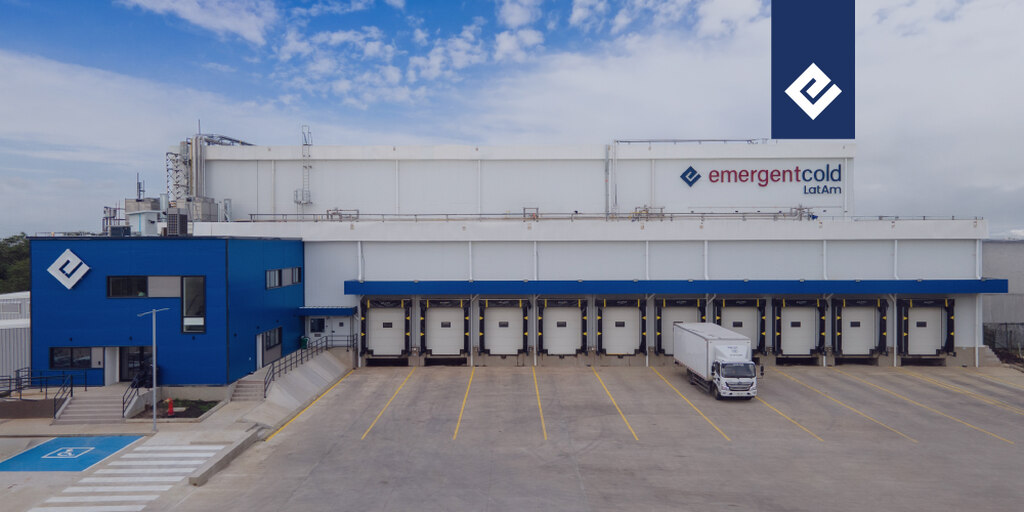
Take the opportunity to check out the video of the new operation for warehousing dry, refrigerated and frozen foods at Emergent Cold LatAm in Guarulhos, São Paulo:
Find out about the Emergent Cold LatAm logistics solutions for the cold chain
The process of exporting fish requires more than just complying with norms or meeting deadlines: you have to offer trust at each stage of the operation.
For this, solid cold chain practices, correct documentation and continuous monitoring are decisive.
At Emergent Cold LatAm, we offer advanced technology, modern infrastructure and a strategic presence in the principal markets of the region.
Find out about our solutions encompassing warehousing to international shipping, with monitoring in real time and teams specialized in perishables.
Thus, your company can have the predictability, reduce waste and increase its competitivity in the fish sector. Discover how our solutions in refrigerated food logistics can support your company at all stages of the cold chain and open up new ways to growth.