

Supply chain planning is one of the factors that most influence the performance of a supply chain. In industries such as perishable foods, aligning demand, production, inventory, and distribution is essential for reducing waste, optimizing resources, and ensuring on-time deliveries.
In this context, supply chain planning brings together processes that make operations more integrated and better prepared to respond to market changes. When well-structured, it strengthens decision-making and increases the efficiency of the entire logistics chain.
Learn more about how this process works, what its main pillars are, and how it contributes to a more efficient and resilient cold chain.

What is Supply Chain Planning, and why is it essential to the supply chain?
Supply Chain Planning is the process of planning, synchronizing, and optimizing all activities involved in the supply chain.
The main objective is to align demand, production, inventory, operational capacity, and distribution to ensure that products are available at the right time, in the right quantity, and at the lowest possible cost.
More than just organizing isolated operations, planning integrates different areas of the company, allowing decisions to be made based on information shared among purchasing, production, warehousing, transportation, and sales.
This integration reduces bottlenecks, improves resource utilization, and increases responsiveness to market changes.
For companies in the food industry, for example, efficient planning helps minimize losses, preserve the quality of perishable goods, and ensure that the entire operation takes place under the conditions required by the cold chain.
The Pillars of Effective Planning
Supply chain planning relies on various processes that work together seamlessly. Among them are:
- Demand forecasting: uses historical data, market trends, and business intelligence to estimate future consumption and guide the entire supply chain.
- Inventory planning: sets appropriate inventory levels to avoid both stockouts and excess inventory, reducing storage costs and waste.
- Capacity management: assesses whether the production infrastructure, distribution centers, and logistics resources can handle the projected volume of operations.
- Production planning: organizes manufacturing schedules by considering demand, raw material availability, and operational capacity.
- Distribution planning: coordinates the flow of goods between factories, distribution centers, and customers, aiming for greater delivery efficiency.
Key Challenges in Planning for Perishable Food Logistics
Seasonality is one of the main challenges. Holidays, climate changes, harvest seasons, and shifts in consumer behavior can cause significant fluctuations in demand within a short period of time.
Another challenge relates to supply chain uncertainties. Supplier delays, transportation difficulties, and logistical disruptions can compromise the entire planning process.
In addition, perishable foods present an extra factor: time. Refrigerated and frozen products must be stored and transported under specific temperature conditions. Any failure along this process can result in losses, waste, and impacts on food quality.
Therefore, effective planning must consider not only volumes and deadlines but also all the specific requirements of the cold chain. The more predictable the operation, the lower the risks of stockouts, excess inventory, and product losses tend to be.
Technology, Analytics, and Artificial Intelligence for More Strategic Decisions
The ability to plan the supply chain has evolved significantly with the advancement of digital technologies. Whereas decisions once depended primarily on team experience and historical data, today tools that analyze information in real time and anticipate different operational scenarios support them.
The use of Big Data and analytics, for example, makes it possible to consolidate information from sales, production, warehousing, transportation, and consumer behavior into a single view. This analysis facilitates the identification of patterns, seasonal trends, and potential bottlenecks that could compromise planning.
Artificial Intelligence (AI), on the other hand, expands this capability by using algorithms to simulate scenarios, predict demand fluctuations, identify supply risks, and recommend adjustments before problems affect operations. Instead of reacting to events, companies are now able to act more predictively.
In the cold chain, connected sensors and monitoring platforms continuously track variables such as temperature, cargo location, and the performance of refrigeration equipment. This information helps quickly detect deviations, reduces losses of perishable goods, and increases the reliability of operations.
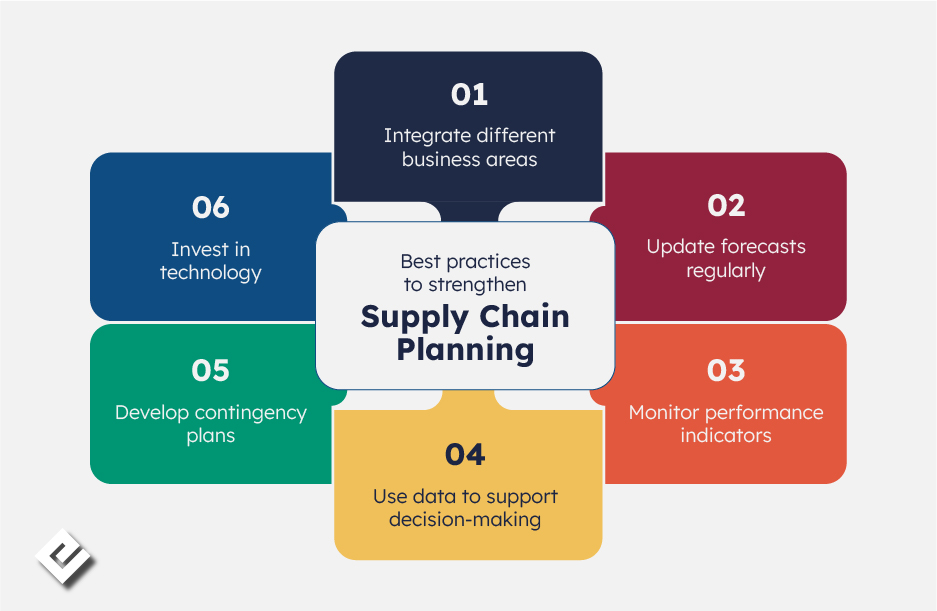
Best Practices for Strengthening Supply Chain Planning
- Integrate company departments: promote information sharing among sales, production, logistics, procurement, and finance.
- Update forecasts regularly: revise scenarios as new market information becomes available.
- Monitor performance indicators: track metrics related to inventory, service levels, capacity, deliveries, and losses.
- Use data as the basis for decisions: reduce decisions based solely on perceptions and strengthen planning guided by reliable information.
- Develop contingency plans: prepare responses to potential disruptions in the supply chain.
- Invest in technology: adopt solutions that increase operational visibility and enable faster analysis.
Strategic Planning and the Cold Chain: Greater Efficiency Across the Entire Operation
Working with logistics providers specializing in the cold chain strengthens the execution of strategic planning.
Appropriate infrastructure, temperature control, operational visibility, and integration between warehousing and transportation make the cold chain more efficient and better equipped to meet market demands.
By combining strategic planning with specialized partners, companies increase their adaptability, reduce waste, and build a more resilient supply chain that is prepared for current and future challenges.
Conclusion
Supply Chain Planning is a strategy that helps make the supply chain more integrated, efficient, and prepared to handle fluctuations in demand and operational challenges.
In perishable food logistics, this planning becomes even more important, as it helps preserve product quality at every stage of the operation. Combined with the expertise of logistics operators specializing in the cold chain, it strengthens decision-making, reduces waste, and increases the efficiency of the entire supply chain.