

Perishable products require much more care than a conventional logistics operation. This is especially true in light of a statistic like this: 526 million metric tons of food—about 12% of global production—are lost or wasted due to insufficient refrigeration, according to the FAO (Food and Agriculture Organization of the United Nations).
It is in this context that Cold Chain Management comes into play for meat, fish, fruits, medications, and other temperature-sensitive items.
The concept encompasses the processes necessary to keep products at a controlled temperature from origin to destination and prevent waste. This involves storage, transportation, monitoring, infrastructure, technology, traceability, and operational procedures.
In practice, each stage influences the next. A shipment may leave the manufacturing facility within the specified temperature range but experience a change during transport or storage. For this reason, the cold chain must be managed as a continuous flow.
What are the main stages of cold chain management?
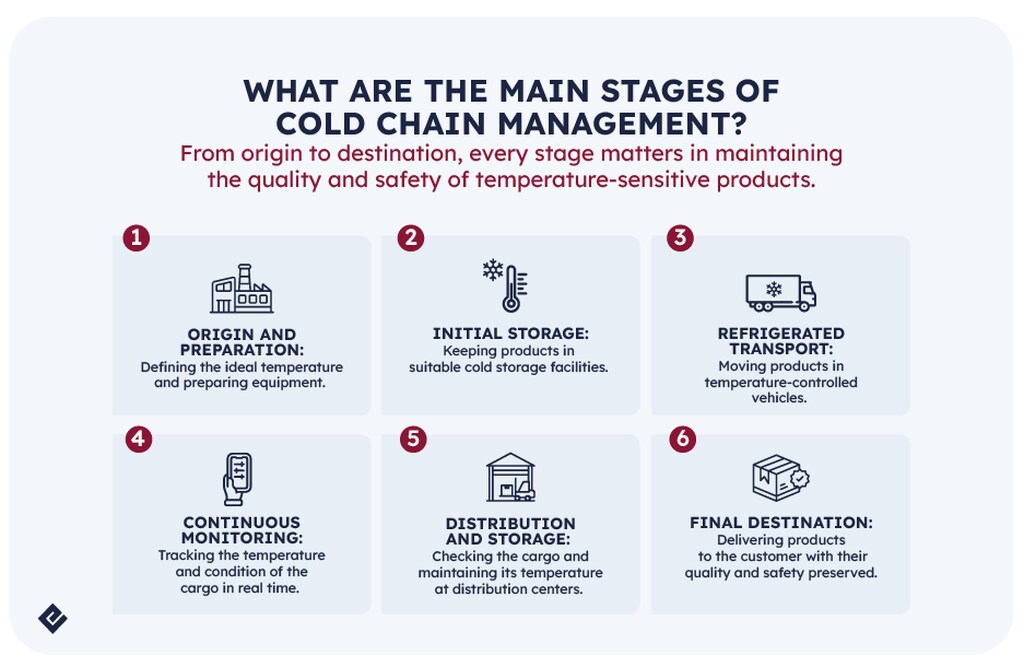
The cold chain begins before loading. First, the company must define the appropriate storage conditions for the product, as well as prepare cold storage rooms, vehicles, and equipment.
Next comes cargo handling. At this stage, temperature, transit time, packaging, and handling become critical.
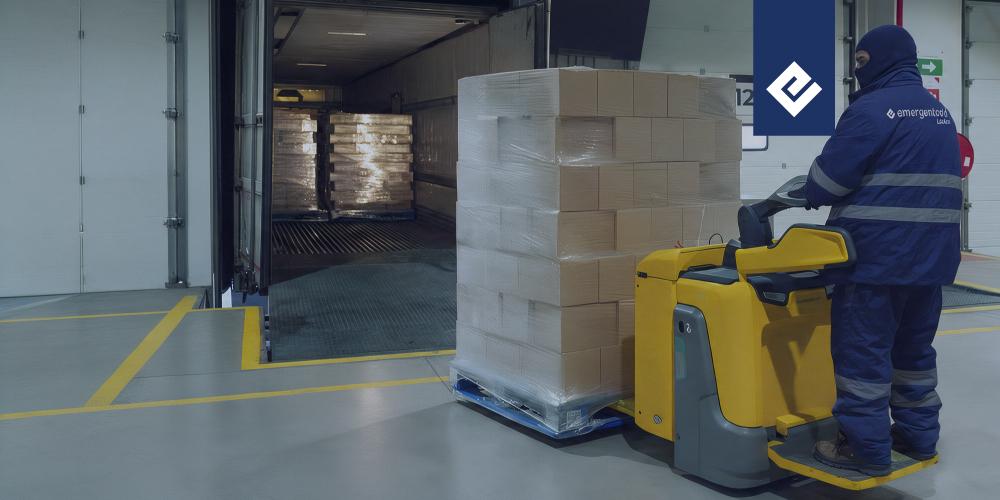
A refrigerated truck, for example, must be prepared before the goods are loaded. Frequent opening of the doors can raise the internal temperature and compromise thermal stability.
Upon arrival at the distribution center, another critical step takes place: inspection. The team checks the condition of the cargo, temperature logs, and any deviations.
Finally, the product proceeds to its destination. This could be a supermarket, restaurant, distributor, hospital, or end customer. Each transfer involves a point of attention.
What factors determine the efficiency of the cold chain?
An efficient cold chain depends on operational planning, infrastructure, and control. The company needs to know:
- the characteristics of the products;
- the routes used;
- the estimated times;
- and the most vulnerable points in the operation.
Infrastructure also plays a major role. Cold storage rooms, loading docks, vehicles, refrigeration systems, and measurement equipment must be appropriately sized for the operation.
Another key aspect is the process standardization. The team must know how to load a cold storage room, organize products, conduct inspections, and respond to temperature changes.
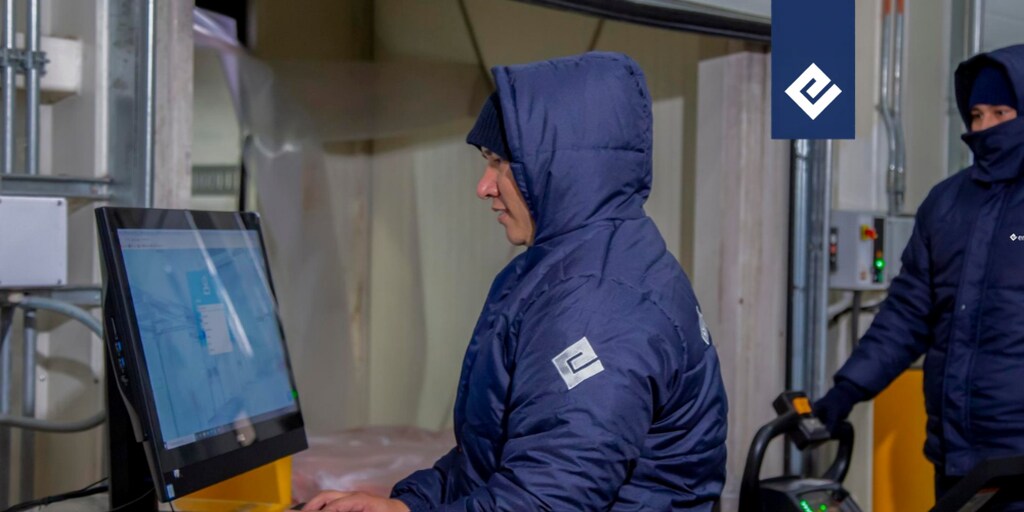
Data visibility completes this picture. When important information (regarding temperature, location, and movement) is centralized in integrated systems, managers can see the operation more clearly.
This makes a difference in real-world situations. If a vehicle experiences a temperature fluctuation during a trip, the team can identify the issue, assess its impact on the cargo, and make a decision before arriving at the destination.
Why are traceability and compliance essential for refrigerated products?
In the cold chain, knowing where the product is is important. Knowing the conditions under which it was stored during transit is even more critical.
Traceability gathers information on batches, movements, storage, transportation, and storage conditions. These records help identify the source of a problem and determine which goods were affected.
This has a direct impact on compliance and food safety. Depending on the product and market, there are specific health and regulatory requirements that must be met.
Consider a company that discovers a problem in a particular batch. With an adequate traceability framework, it can locate the distributed products, verify the supply chain records, and take more precise action.
Without this data, the response tends to be slower and less targeted. And costs may also rise.
How can losses be reduced and energy efficiency increased in the cold chain?
Refrigeration accounts for a significant portion of the costs in a cold chain operation. Therefore, energy efficiency and loss reduction go hand in hand.
Preventive maintenance is one of the first areas to focus on. Equipment with malfunctions, inadequate insulation, or poor performance can consume more energy and cause thermal instability.
Operational planning also matters. A cold storage room that is poorly organized can hinder the circulation of cold air. Doors left open for excessive periods of time lead to further waste.
A distribution center that improves its temperature controls can reduce incidents, make better use of its equipment, and achieve greater cost predictability.
What is the role of cold chain management in exports?
In exports, the complexity increases. The cargo may pass through different operators, modes of transport, facilities, and borders before reaching the buyer.
Temperature continuity must be maintained throughout this entire journey. Documentation, traceability, and logistics planning also come into play.
For food that is refrigerated or frozen, a failure during an international leg of the journey can lead to delays, loss of quality, or even rejection of the shipment.
For this reason, exporters need to evaluate the chain as a whole.
Maritime transport, for example, relies on refrigerated containers and adequate port infrastructure. From there, the cargo may proceed to distribution centers and overland transport.
The longer the journey, the greater the importance of visibility into the operation.
How does Emergent Cold LatAm integrate refrigerated storage and transport?
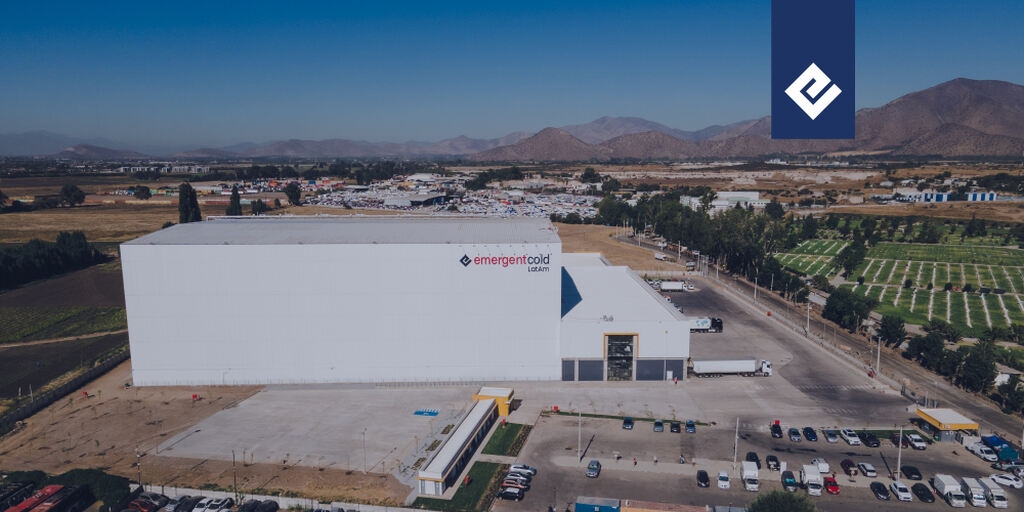
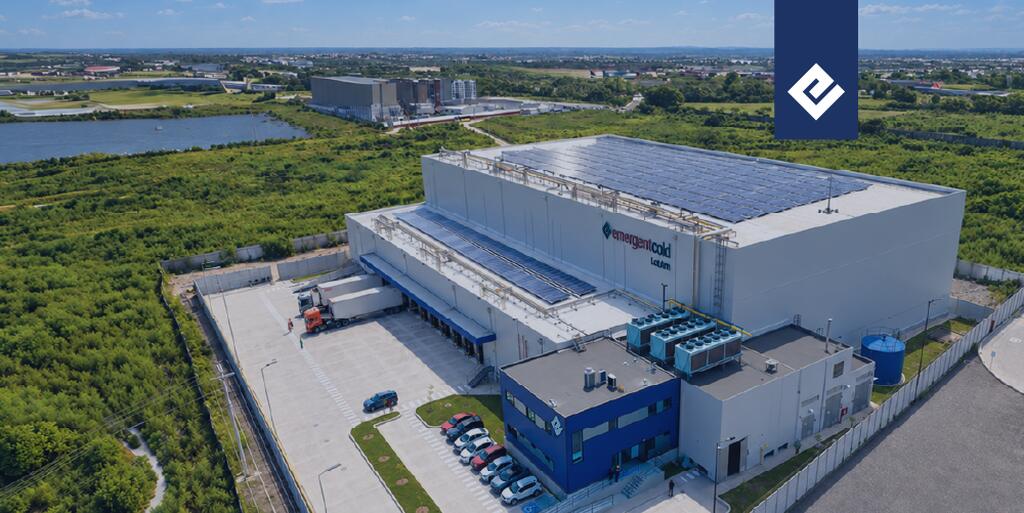
Emergent Cold LatAm operates in the cold chain infrastructure sector in Latin America, offering solutions focused on the storage and handling of temperature-controlled products.
The integration of storage and transportation holds strategic value for operations that need to maintain temperature control throughout different stages of the logistics process. Instead of analyzing each service in isolation, the company is able to structure a more interconnected operation.
In practice, this may involve refrigerated storage, frozen storage, and controlled-environment storage, in addition to transportation and services related to the movement of products.
For a company that works with frozen foods, for example, having a specialized infrastructure throughout the supply chain can simplify logistics decisions and reduce points of disruption. That is why Emergent Cold LatAm’s support is so important.
Learn about our temperature-controlled storage solution!
FAQ
What is the difference between the cold chain and refrigerated logistics?
Refrigerated logistics focuses primarily on the movement and preservation of products at controlled temperatures. The cold chain takes a broader view: it includes production, storage, transportation, distribution, monitoring, traceability, and control processes.
Which products rely on a cold chain?
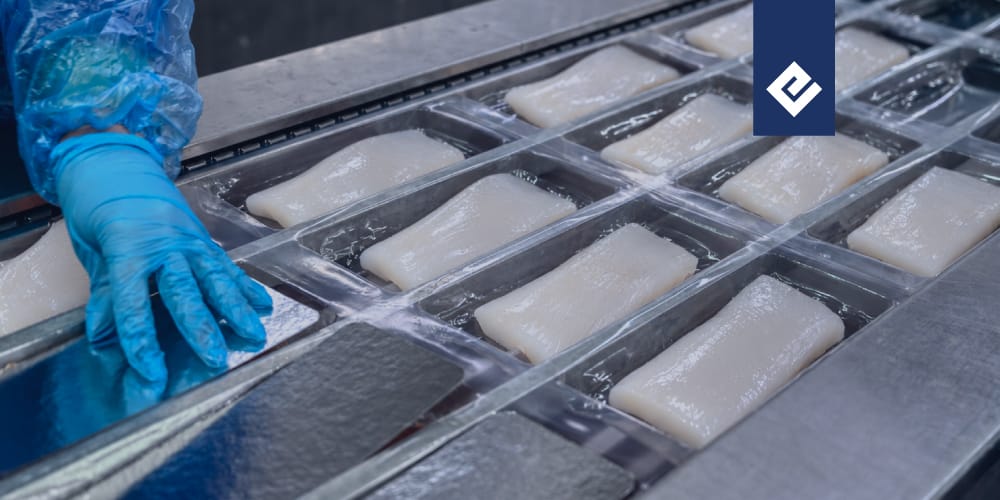
Examples include frozen and refrigerated foods, meat, seafood, dairy products, fruits, vegetables, and certain pharmaceutical products. The temperature range varies depending on the characteristics and requirements of each product.
What happens when the temperature falls outside the recommended range?
The impact depends on the product, the severity of the deviation, and the duration of exposure. A deviation can reduce quality, shorten shelf life, or compromise product safety. Therefore, records and alerts are important for accurately assessing each occurrence.
How does technology help control temperature and mitigate risks?
Sensors and monitoring devices have transformed cold chain monitoring. Instead of relying solely on manual measurements, companies can track temperature throughout the entire operation.
Sensors record information at set intervals. The technology also creates a historical record. This is important for audits and decision-making. By comparing records from different routes or facilities, the company can identify patterns and pinpoint recurring points of failure.