


The Food Service sector brings together companies responsible for preparing, distributing, or serving food for consumption outside the home.
This market includes restaurants, bars, hotels, hospitals, industrial kitchens, catering services, fast-food chains, and various other establishments that rely on efficient operations to ensure product quality, safety, and availability.
In recent years, the sector has undergone a transformation driven by changes in consumer behavior, technological advances, and a growing demand for agility, traceability, and sustainability.
In this context, refrigerated logistics has become a strategic factor in preserving food quality and increasing companies’ competitiveness.

What Is “Food Service”?
The term “Food Service” refers to the range of activities related to the production, storage, distribution, and sale of foods intended for immediate consumption outside the home.
Unlike food retail, where products reach the end consumer directly, this segment serves establishments that prepare or serve food on a daily basis. This requires well-coordinated logistics processes to ensure a continuous supply, inventory control, and maintenance of product quality.
Since many foods are perishable (meat, fruits, vegetables), any failure in storage or transportation can lead to waste, compromise the consumer experience, and increase operating costs.
For this reason, companies operating in this market need to integrate suppliers, logistics operators, and distributors to keep the entire supply chain running efficiently.
Why Is The Food Supply Chain Critical to the Food Service?
Operational performance depends directly on the efficiency of the food supply chain. Every stage, from production to delivery at points of consumption, influences the quality, safety, and availability of products.
Raw materials must arrive on time, under the proper temperature and storage conditions. At the same time, inventory must be managed in a balanced manner to avoid both stockouts and losses due to expiration.
When there is integration among manufacturers, distributors, and logistics operators, it becomes possible to increase the predictability of operations, reduce waste, and respond more quickly to fluctuations in demand.
In the perishable food supply chain, this integration is even more critical because temperature control must be maintained throughout all stages of product handling.
What Are the Pillars of an Efficient Operation?
Companies in this sector face a fast-paced environment, with high order volumes, tight deadlines, and the need to maintain consistent quality standards. To achieve this balance, certain pillars are essential.
Operations Management
An efficient operation depends on planning, cross-departmental integration, and constant monitoring of processes. The use of performance metrics helps identify opportunities for improvement, reduce costs, and increase productivity.
In addition, more accurate demand forecasts allow for more efficient organization of purchasing, production, and distribution, preventing excess inventory or product shortages.
Food Safety
Ensuring food safety is a priority at every stage of the operation.
Good practices in handling, hygiene, traceability, and monitoring of storage conditions help preserve product quality and build consumer confidence.
This concern extends beyond production. As Ana Ardilla, Quality, Health, Safety, and Environment Manager at Emergent Cold LatAm, explains, especially in categories such as proteins, frozen foods, baked goods, and ready-to-eat meals, quality standards are not verified solely within the manufacturing facility. They must be maintained throughout the entire logistics chain, from the source to the point of consumption.
More than just meeting market expectations, investing in food safety helps reduce operational risks and minimize losses.
Temperature Control
For refrigerated and frozen foods, maintaining the proper temperature is one of the most important factors in preserving characteristics such as texture, flavor, nutritional value, and shelf life.
Continuous monitoring allows for the rapid identification of any deviations and enables action to be taken before they compromise the shipment.
Logistics and Storage
Strategically located distribution centers, temperature-controlled storage systems, and efficient delivery planning help reduce transit time and increase product availability.
When these operations are integrated, the entire supply chain gains greater agility, predictability, and efficiency.
The Main Challenges in Maintaining Quality and Competitiveness
The industry faces constant challenges that require planning and the ability to adapt.
One of the main challenges is food waste. Errors in demand forecasting, storage failures, or disruptions in the cold chain can lead to significant losses and increase operating costs.
Another important factor is seasonality. Holidays, climate changes, and even shifts in consumer behavior cause fluctuations in demand that require greater logistical flexibility.
There is also a need to meet the varying demands of markets and customers, who are seeking products that are increasingly safe, traceable, and delivered within short timeframes.
In this context, relying on standardized processes and specialized partners becomes an advantage for maintaining high levels of quality and efficiency.
Refrigerated Logistics as a Competitive Advantage
Refrigerated logistics goes far beyond the transportation of food. It integrates storage, handling, distribution, and continuous monitoring of product preservation conditions.
When managed by specialists, it helps reduce waste, preserve food quality, and increase operational efficiency.
Another benefit is greater supply chain predictability. With structured processes and real-time monitoring, companies can respond more quickly to changes in demand and reduce risks related to stockouts.
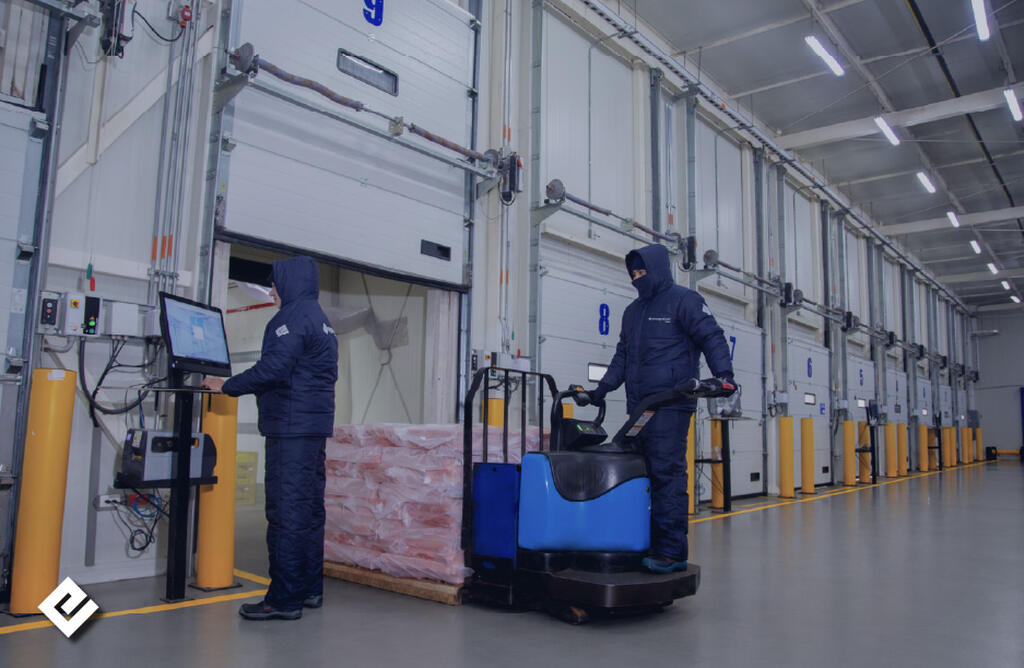
In addition, specialized operators have infrastructure tailored to different types of products, offering refrigerated and frozen storage, temperature-controlled transportation, and traceability systems that provide greater visibility into operations.
This suite of solutions strengthens companies’ competitiveness and contributes to a safer and more efficient food supply chain.
Trends That Are Transforming the Industry
The market continues to evolve, driven by innovation and the pursuit of smarter operations.
Digitization has increased visibility across supply chains through integrated platforms that enable real-time tracking of inventory, orders, and deliveries.
Another trend is the adoption of end-to-end logistics solutions that integrate warehousing, transportation, distribution, and value-added services into a single operation. This approach increases visibility and makes the supply chain more efficient and better prepared to respond to fluctuations in demand.
Automation is also gaining ground in distribution centers, which boosts productivity, reduces operational errors, and improves infrastructure utilization. Another trend is the use of connected sensors and Internet of Things (IoT) technologies to monitor temperature, humidity, and the location of shipments throughout the entire operation.
At the same time, sustainability is taking on an increasingly strategic role. Reducing food waste, optimizing transportation routes, improving warehouse energy efficiency, and using technologies that reduce resource consumption help companies minimize their environmental impact while increasing their operational efficiency.
Logistics Solutions to Boost the “Food Service”
As the sector becomes more dynamic and demanding, investing in specialized logistics is no longer just an operational necessity but has become a competitive advantage.
Operators with cold chain expertise offer infrastructure equipped for temperature-controlled storage, refrigerated transport, continuous monitoring, and integrated solutions that increase efficiency at every stage of distribution.
In light of this, our services combine technology, modern infrastructure, and a strategic presence in Latin America to support companies seeking greater control over their operations, reduced losses, and enhanced safety in the handling of perishable foods.
With a well-structured logistics chain, the industry can meet the expectations of consumers and customers, preserve product quality, and build operations that are more resilient, efficient, and prepared for market challenges.