

Atlantic salmon, known as Salmo Salar, is one of the mainstays of Chile’s export portfolio and plays a strategic role in the global market for premium proteins.
With high international demand and a strong presence in markets such as the United States, Japan, and Brazil, Atlantic salmon has established Chile as a powerhouse in global aquaculture.
This leading role depends not only on large-scale production but also on logistical efficiency. In particular, the cold chain is a critical factor in ensuring that Atlantic salmon maintains its quality, freshness, and nutritional value throughout its entire journey to the end consumer.
In this article, learn why Chile leads global production of this type of fish, what the main logistical challenges are, and how the cold chain is crucial to the success of exports.

Why does Chile lead global production of Salmo salar?
Currently, Chile is one of the world’s largest salmon exporters. According to data from El Mapio, between January and February 2026 alone, exports of salmon and other fish reached US$1.405 billion.
In this context, Atlantic salmon deserves special mention, as it accounts for a large portion of the country’s export volume. This leading role is the result of a combination of natural, technological, and operational factors.
The geographical conditions of southern Chile—with its cold, clean, and sheltered waters—create an ideal environment for fish farming. In addition, the country has invested heavily in aquaculture technology, ensuring production efficiency, health control, and quality standardization.
This scenario positions Chile as a global leader not only in terms of volume but also in reliability and consistency in product delivery.
Puerto Montt and Puerto Varas: Strategic Hubs for the Salmon Farming Industry
The Los Lagos region is the heart of Chile’s Atlantic salmon industry. Cities such as Puerto Montt and Puerto Varas serve as key hubs for salmon production, processing, and distribution.
Puerto Montt stands out as the main logistics hub, with access to ports, airports, and highways that facilitate the shipment of fish to various international markets. Puerto Varas, meanwhile, is home to industrial infrastructure and storage facilities that support the production chain.
The proximity of farming centers, processing plants, and logistics facilities reduces the time between harvest and the start of transport. This is essential for preserving the quality of the fish and ensuring operational efficiency.
These hubs serve as integration points between production and export, enabling more agile and predictable logistics.
See also: Emergent Cold LatAm opens Latin America’s largest automated food warehouse in Chile
Key Challenges in Atlantic Salmon Logistics

The logistics of Salmo Salar require a high level of operational precision, particularly because it is a highly perishable product destined for demanding markets.
Among the main operational challenges are:
● A short time window between processing and final delivery.
● Proper handling to prevent physical damage to the product.
● Coordination between transport modes (road, air, and sea).
● Compliance with international health standards.
● Complete cargo traceability.
● Continuous maintenance of the cold chain.
These factors make logistics efficiency not only a competitive advantage but an essential requirement for ensuring quality, food safety, and access to global markets.
As Cristian Cornejo, Commercial Director at Emergent Cold Chile, points out:
“In an environment of stringent sanitary requirements, pressure on margins, and increasing consumer sensitivity, operating without failures is no longer enough. The difference lies in the ability to build an operation that is predictable, controlled, and scalable.”
Critical Stages of Logistics: From Storage to Distribution
The logistics operation for Atlantic Salmon involves an integrated chain, in which each stage must function in a coordinated manner to prevent losses.
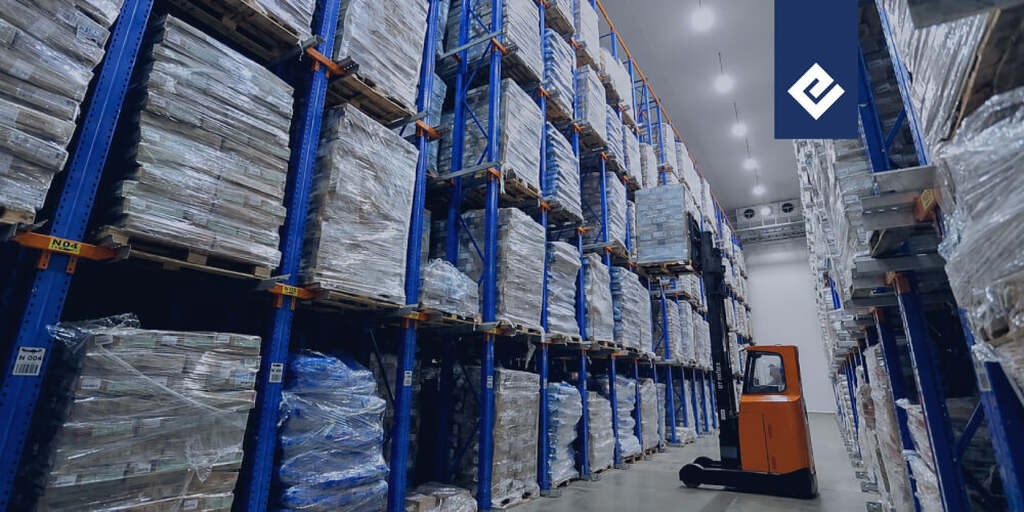
The process begins with storage in cold storage facilities, where the product is rapidly chilled after processing. This stage stabilizes the fish’s characteristics and prepares the cargo for transport.
Next comes transportation, which may involve different modes, depending on the destination. The choice and integration of these modes directly impact delivery times and logistics costs.
Finally, international distribution requires agility and precision, especially in export operations. The proximity of refrigerated facilities to production hubs and port terminals reduces transit time and increases operational efficiency.
A well-structured supply chain ensures that the product reaches its destination in compliance with required standards, without compromising its quality.
Temperature Control: The Decisive Factor for Competitiveness
Temperature control is one of the most critical elements throughout the entire logistics chain for Atlantic salmon (Salmo salar). After processing, the product must be rapidly cooled and maintained at strictly controlled temperatures.
Maintaining the cold chain throughout all stages (storage, transportation, and distribution) preserves the food’s integrity, texture, and safety.
Furthermore, efficient temperature control reduces losses and waste, directly impacting the operation’s profitability. In international markets, where sanitary standards are highly stringent, any temperature variation can compromise entire batches.
Therefore, the ability to monitor and ensure ideal temperature conditions throughout the entire logistics journey becomes a strategic advantage for exporters.
How Our Solutions Strengthen Atlantic Salmon (Salmo Salar) Logistics
We act as a strategic partner in Chile’s salmon logistics chain, offering specialized solutions in refrigerated storage and temperature-controlled operations management.
With a presence in key regions, such as Puerto Varas, San Antonio, San Pedro de la Paz, Santiago, Talcahuano, and Valparaíso, we offer modern infrastructure, rigorous temperature control, and operational capacity to meet the demands of the salmon farming industry.
Our facilities ensure efficient storage and proper preparation for export, guaranteeing quality and compliance with international standards. By integrating technology, strategic location, and cold chain expertise, we directly contribute to more efficient and competitive operations.
For companies looking to expand their storage capacity, optimize logistics operations, or strengthen their exports, having a specialized partner can make all the difference. Our infrastructure and cold chain expertise support the growth of your operation without compromising product quality and safety.
If you want to increase the efficiency of your salmon logistics, talk to our sales team and discover how our solutions can support the growth of your operation in domestic and international markets.